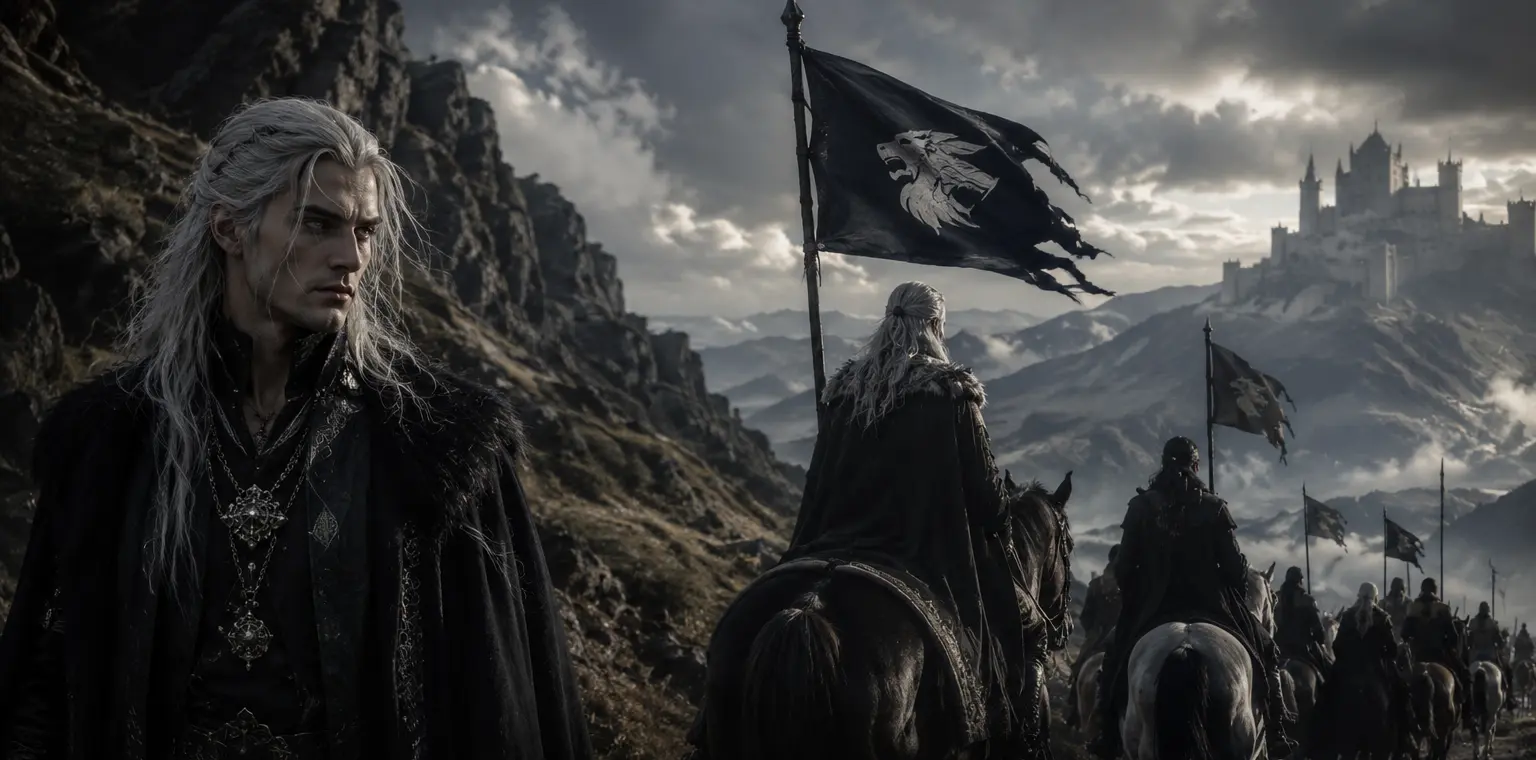
The Men Who Called Him Aldren
Three men stop traveling beside a prince and begin choosing the king they will still be allowed to refuse.
The Inn with One Bed Too Few
The problem with traveling beside a prince, Teren Dramarch had discovered, was that everyone assumed the prince deserved the best bed.
The problem with traveling beside Quarn Levan was that Quarn did not.
“There are four beds,” the innkeeper said.
Quarn looked past him.
“Five.”
The innkeeper turned.
“One is a bench.”
“Long bench.”
“It is not a bed.”
“Will be by midnight.”
Teren leaned against the counter.
“I volunteer Halvern.”
“No,” Halvern said.
“You don’t even know for what.”
“Yes.”
Corven stood behind them with three packs over one shoulder and a fourth under one arm.
Aldren was holding nothing.
He noticed.
“Give me one.”
Corven looked at him.
“No.”
Aldren frowned.
“I can carry a pack.”
“I know.”
“Then give me one.”
Corven adjusted the straps.
“No.”
Teren smiled.
“Careful, Your Highness. Ironvale has discovered authority.”
Aldren reached for the smallest pack.
Corven moved it out of reach without appearing to move quickly.
The innkeeper stared.
Aldren stared harder.
Corven said:
“You rode the last three hours with a bruised shoulder.”
“It is not broken.”
“Good.”
“That means I can carry something.”
“It means I do not need to carry you.”
Teren turned to Halvern.
“That sounded almost affectionate.”
Halvern took a key from the innkeeper.
“You mistake function for affection.”
“I mistake nothing.”
“That is the most inaccurate thing you have said today.”
“Today is young.”
Quarn had already disappeared toward the stable.
Aldren watched him leave.
“He didn’t take a key.”
“He has a horse,” Halvern said.
“That is not a room.”
Teren looked toward the rain outside.
“For Quarn, proximity to an axle counts as hospitality.”
The innkeeper cleared his throat.
“Your Highness, the upper chamber is prepared.”
Aldren looked toward the stairs.
“And them?”
The innkeeper blinked.
“My lord?”
“Where do they sleep?”
“The adjoining room has three beds.”
“And the fourth?”
“The bench.”
Teren pointed at Halvern.
“Settled.”
Halvern gave him the key.
“You take the bench.”
“Why?”
“You volunteered first.”
Aldren almost laughed.
Then noticed the innkeeper watching him.
Immediately, something changed.
Not in the room.
In himself.
His shoulders straightened.
The smile left before it had properly arrived.
“Very well,” Aldren said. “I’ll take the upper chamber.”
Teren saw it happen.
So did Halvern.
Corven looked down at the packs.
The innkeeper bowed.
“Of course, Your Highness.”
Aldren climbed the stairs alone.
The door closed above them.
For a few seconds, nobody spoke.
Then Teren said:
“I hate that.”
Halvern looked at him.
“What?”
“The door.”
“It is a door.”
“I know.”
Corven set the packs down.
“He is tired.”
“That is not what I meant.”
Halvern knew.
That made him dislike the answer more.
“He is the royal heir.”
“Yes.”
“He cannot expect every room to forget it.”
“No.”
Teren glanced toward the stairs.
“But he can.”
Halvern said nothing.
Corven began separating their gear.
“Quarn will say we are inventing problems.”
“He will say the roof leaks.”
“The roof does leak.”
Teren looked up.
A drop of water struck his cheek.
Corven pointed.
“There.”
Teren wiped it away.
“I despise practical men.”
Halvern opened the room door.
“You chose to travel with three.”
“Three?”
“Quarn. Corven. Reality.”
Teren stopped.
Corven laughed.
It was rare enough that both men looked at him.
Halvern went inside.
Teren followed slowly.
“That was a joke.”
“No.”
“That was absolutely a joke.”
“No.”
“Corven, witness.”
“I heard nothing.”
Teren stood in the doorway.
“This group is becoming unsafe.”
Aldren had not undressed.
He sat beside the window, one boot off, one still on, reading a road assessment that had already been read twice.
There was a knock.
“Come in.”
Teren entered carrying a cup.
Aldren looked at him.
“No.”
Teren stopped.
“I haven’t offered anything.”
“You have wine.”
“Mostly.”
“No.”
Teren put the cup on the table.
“It is for me.”
“Then why bring it here?”
“To improve the room.”
Aldren returned to the report.
Teren looked around.
Large bed.
Dry walls.
Private fireplace.
Clean basin.
A chair designed for someone important enough not to share furniture.
“Terrible.”
Aldren did not look up.
“What?”
“This.”
“The room?”
“Yes.”
“It is objectively better than yours.”
“That is the problem.”
Aldren put down the paper.
“I don’t follow.”
Teren walked to the window.
Below, travelers were moving between stable and common room.
“Everywhere we go, people make a better room for you.”
“I am the royal heir.”
“I noticed.”
“That sounded accusatory.”
“It was observational.”
Aldren waited.
Teren had become better over the last months at knowing when a joke would help and when it would merely prevent him from saying what he meant.
Tonight he chose the harder option.
“You keep leaving us downstairs.”
Aldren’s face changed.
“I don’t leave you.”
“You do.”
“The innkeeper—”
“Exactly.”
Teren leaned against the sill.
“He separates you. You cooperate.”
“What do you want me to do? Demand that every inn abandon protocol?”
“No.”
“Then what?”
“Notice.”
Aldren frowned.
“I did notice.”
“No.”
Teren shook his head.
“You noticed the bed.”
A pause.
“You did not notice what happened to your face before you climbed the stairs.”
Aldren looked away.
The fire shifted behind them.
Teren picked up his cup.
“Your father had the same problem.”
Aldren looked back sharply.
“You knew him?”
“Enough to be yelled at twice.”
“That means almost nothing.”
“One of the times was memorable.”
“What did you do?”
“Nothing proven.”
Aldren waited.
Teren smiled slightly.
Then let it go.
“Your father could enter a room and remain Valerius for about thirty seconds. Then everyone started needing a king.”
“And?”
“He became one.”
“That sounds correct.”
“It was.”
Teren looked toward the closed door.
“He still hated it.”
Aldren sat very still.
“Did he tell you that?”
“No.”
“How do you know?”
Teren tapped one finger beside his eye.
“Dramarch.”
Aldren rolled his eyes.
“You use that whenever you want to sound mysterious.”
“It works.”
“No.”
“Quarn has infected you.”
A knock interrupted them.
Corven opened the door.
He was carrying the inn bench.
Aldren stared.
“What are you doing?”
“Moving the bench.”
“Why?”
“It is long enough.”
“For what?”
Corven placed it beside the wall.
Halvern entered behind him with blankets.
Teren’s smile widened.
Aldren looked between them.
“No.”
Halvern spread a blanket across the bench.
“You have not heard the proposal.”
“I know enough.”
Teren pointed.
“He learns.”
Corven sat on the floor.
Aldren looked at him.
“There are chairs.”
“One.”
“Yes.”
“You are using it.”
Aldren stood immediately.
Corven sighed.
“That was not an instruction.”
Halvern took the chair.
Aldren stared.
Halvern opened a ledger.
“What?”
“That was my chair.”
“It was empty.”
Teren sat on the foot of the bed.
“The Crown has fallen.”
Aldren finally laughed.
Quietly at first.
Then properly.
Laughter made the room briefly ordinary.
No herald.
No innkeeper.
No witnesses.
Only four young men and a prince who was slowly learning that privacy could be built instead of granted.
They played cards badly.
Corven lost because he could not bluff.
Halvern lost because he refused to lie about whether he was bluffing.
Teren lost because everyone assumed he was lying even when he was not.
Aldren won twice.
Teren accused the Crown of corruption.
Near midnight, Quarn opened the door.
He looked at the bench.
At Halvern in the chair.
At Corven asleep against the wall.
At Teren sprawled diagonally across half the bed.
At Aldren still holding cards.
Quarn frowned.
“Stable has more space.”
Teren opened one eye.
“Join us.”
“No.”
“We saved you the bench.”
“No.”
Halvern said without looking up:
“He has a horse.”
Aldren began laughing again.
Quarn looked at him.
Something old passed through his expression.
Gone before Aldren could identify it.
Then Quarn closed the door.
For that night, the prince stayed downstairs.
Corven’s Letter
Corven Ironvale received the most terrifying message of his military career while holding a broken cart wheel above his head.
The courier dismounted badly.
“Lord Corven.”
Corven kept holding the wheel.
“Yes?”
“A letter.”
“Put it there.”
The courier looked at the mud.
“Where?”
Corven pointed with his chin.
“Rock.”
Teren was lying in the grass nearby, contributing nothing.
He lifted his head.
“From whom?”
The courier looked uncomfortable.
“Lady Ironvale.”
Corven dropped the wheel.
Not on anyone.
Barely.
Teren sat up.
Halvern stopped checking the bridge manifest.
Aldren turned from Quarn.
Corven stared at the letter.
No one spoke.
Teren stood.
“Should we leave?”
Corven looked at him.
“Yes.”
Teren stepped closer.
“Excellent.”
Corven took the letter.
“You said leave.”
“I changed my mind.”
Halvern closed his eyes.
Quarn continued repairing the axle.
Aldren watched Corven break the seal.
Corven read.
Once.
Then again.
His face did not change.
That was alarming.
Teren leaned.
Corven folded the letter immediately.
“What?”
“Nothing.”
“That is clearly not nothing.”
Corven put the letter inside his coat.
Teren looked at Aldren.
“Use royal authority.”
“No.”
“Halvern?”
“No.”
“Quarn?”
“Wheel.”
Teren looked betrayed by civilization.
Corven picked up the cart wheel again.
Aldren said:
“Is she well?”
Corven stopped.
“Yes.”
“The House?”
“Yes.”
“Then?”
Corven looked at the road.
His ears had become red.
Teren saw.
Everything stopped.
“No.”
Corven turned.
“Teren.”
“No.”
“What?”
Teren’s eyes widened.
“No.”
Halvern finally looked up.
“What?”
Teren pointed at Corven.
“He’s going to be a father.”
Corven said nothing.
That was confirmation.
Aldren’s face lit immediately.
“Really?”
Corven looked at him.
“Yes.”
Teren put both hands on his head.
“You?”
Corven frowned.
“Apparently.”
“You are twenty-two.”
“I know.”
“That is unreasonably responsible.”
“How?”
“It makes the rest of us look deliberate.”
Halvern folded the manifest.
“Congratulations.”
Corven nodded once.
“Thank you.”
Aldren stepped forward.
“What did the letter say?”
Teren gasped.
“Your Highness.”
Aldren stopped.
“What?”
“There are boundaries.”
“You were trying to read over his shoulder.”
“That is different.”
“It is literally worse.”
Quarn pushed the repaired axle into place.
“Boy right.”
Teren looked toward the wagon.
“Do not encourage him.”
Quarn stood.
“Father now.”
Corven nodded.
Quarn looked at him for several seconds.
“Sleep.”
Corven blinked.
“What?”
“Sleep when you can.”
“That is your advice?”
“Yes.”
Teren said:
“I was expecting something profound.”
“Why?”
Corven laughed.
The sound came strange from him.
Nervous.
Aldren had never heard that before.
Corven could enter a flooded river without hesitation.
Could put his body between a falling beam and three strangers without appearing to consider it.
Could face armed men with the calm of a wall.
But one folded piece of paper had altered the way he stood.
Aldren noticed.
“What are you afraid of?”
Corven looked at him.
Teren stopped smiling.
Halvern looked away, granting the question privacy without leaving.
Corven thought for a long time.
“That I’ll do it wrong.”
Aldren frowned.
“Being a father?”
“Yes.”
“Why?”
Corven touched the letter through his coat.
“My father is very good at being Lord Ironvale.”
“That was not the question.”
Corven looked at him.
Aldren had learned that from Halvern.
He was becoming irritating.
Corven sighed.
“I know how to carry things.”
Teren said softly:
“We noticed.”
“I know how to stand somewhere.”
“How to block a door,” Aldren added.
“How to lift a wagon,” Teren said.
Halvern:
“How to ignore reasonable limits.”
Corven gave him a look.
Halvern did not retract it.
Corven continued.
“I don’t know if that is enough.”
Quarn picked up a length of rope.
“No.”
Corven turned.
Quarn tied the rope around the repaired axle.
“Not enough.”
Teren muttered:
“His comfort improves every year.”
Quarn pulled the knot tight.
“Good.”
Corven looked at him.
“What is enough?”
Quarn shrugged.
“Find out.”
Corven frowned.
“That is terrible advice.”
“Yes.”
“Valerius listened to you?”
“Sometimes.”
“How did Gavrion survive?”
“Barely.”
Aldren smiled.
But something in Corven’s expression remained.
A weight with no obvious place to set down.
That evening, Teren found Corven sitting alone beside the wagon.
The letter was open again.
Teren stopped several steps away.
This time he did not try to read it.
“Boy or girl?”
Corven looked up.
“We don’t know.”
“Which do you want?”
“Healthy.”
“That is an annoyingly respectable answer.”
“It is the answer.”
Teren sat beside him.
For once there was no cup in his hand.
After a while he said:
“You’ll be unbearable.”
Corven smiled faintly.
“I already am.”
“No. Currently you only try to carry everyone.”
“And later?”
“You’ll try to carry someone who actually belongs to you.”
Corven looked at the letter.
Teren’s voice lost its lightness.
“Don’t.”
Corven turned.
“What?”
“Make that the same thing.”
Silence.
Corven understood immediately.
That was what made Teren dangerous when he stopped joking.
He saw things before they had language.
“You think I will.”
“I think you are Ironvale.”
“That is not an answer.”
“Halvern is infecting everyone.”
Corven waited.
Teren sighed.
“You think protecting someone means standing between them and everything.”
“Yes.”
“Children grow.”
“So?”
“They eventually need things you cannot stand in front of.”
Corven stared at him.
Teren shrugged.
“I expect nieces eventually.”
“Not yet.”
“My brother will manage.”
“You are giving fatherhood advice based on hypothetical nieces?”
“Yes.”
Corven laughed.
Teren smiled.
Then Corven looked back at the letter.
“What if I fail?”
Teren leaned against the wagon.
“You will.”
Corven looked at him.
“Thank you.”
“You wanted honesty.”
“I wanted reassurance.”
“Wrong group.”
Across the camp, Halvern was correcting Aldren’s wording on a local tax order.
Quarn was teaching a twelve-year-old stable hand to replace a wheel pin.
Aldren looked up at something Halvern said and argued immediately.
Teren watched.
“Maybe failure is not the same as leaving.”
Corven followed his gaze.
“No.”
Teren’s voice became quieter.
“It isn’t.”
That night Corven wrote his wife a reply.
It was six pages.
Teren discovered this accidentally and laughed for two full minutes.
Corven threatened to throw him into the river.
Halvern said the river had rights.
Aldren asked whether those rights were voluntary.
Halvern stopped.
Teren nearly died.
Quarn slept through all of it.
The Day No One Knew the Prince
Aldren discovered anonymity because Teren stole his clasp.
It happened beside a fruit stall.
One moment the silver Crown clasp sat at Aldren’s throat.
The next it did not.
Aldren grabbed Teren’s wrist.
“Give it back.”
“No.”
“Teren.”
“You say my name like Quarn now.”
“Give it back.”
Teren held the clasp above his head.
Aldren was tall for fourteen.
Teren was taller.
This had become politically significant.
Halvern arrived carrying two cups of water.
“What are you doing?”
“Treason,” Aldren said.
Teren looked offended.
“Education.”
Corven appeared behind them with a bundle of cloth Lady Ironvale had requested from the market.
Quarn was nowhere visible.
This was not reassuring.
Halvern held out one hand.
“Teren.”
“No.”
Halvern’s expression changed by almost nothing.
Teren immediately gave him the clasp.
Aldren stared.
“How?”
Halvern handed it to him.
“I asked.”
“He refused when I asked.”
“Yes.”
“That does not explain anything.”
“No.”
Teren smiled.
Aldren clipped the silver piece back onto his coat.
Then looked around.
Nobody had noticed.
Bellmere was loud with summer.
Blue cloth over the stalls.
Cooking smoke.
Children with paper birds tied to sticks.
Musicians beside a fountain.
Farmers shouting prices.
Two girls arguing over ribbons.
An old woman sleeping under a table while her family sold pears above her.
There were guards at the market edge.
None close enough to create a royal bubble.
Aldren touched the clasp.
Then slowly removed it.
Teren saw.
Said nothing.
Halvern saw.
His mouth tightened.
Corven looked toward the nearest guard.
“No.”
Aldren smiled.
“I didn’t ask.”
“You were going to.”
Quarn’s phrase.
Corven had stolen it.
Aldren put the clasp inside his coat.
“For one hour.”
Halvern said:
“Absolutely not.”
Teren:
“One hour.”
“You do not have authority to approve this.”
“I have enthusiasm.”
“That is not authority.”
“Frequently confused.”
Aldren looked at Halvern.
“One hour.”
“No.”
“I am not issuing an order.”
“That makes it worse.”
“Why?”
“Because then I cannot formally object.”
Teren placed a hand on Halvern’s shoulder.
“You are growing.”
Halvern removed it.
Corven looked around the market again.
“Thirty minutes.”
Aldren said:
“Forty-five.”
“Thirty.”
“Teren?”
“One hour.”
“You are not helping.”
“I am helping you negotiate.”
Quarn appeared beside the pear stall.
Nobody had seen him approach.
“Forty.”
Everyone turned.
Aldren blinked.
“You knew?”
“Clasp was visible.”
“About what?”
“Everything.”
Teren looked almost wounded.
“How long were you there?”
Quarn took a pear.
“Long enough.”
The old woman beneath the stall opened one eye.
“You paying?”
Quarn put down a coin.
She closed her eye again.
Aldren smiled.
“Forty minutes.”
Quarn bit into the pear.
“Clock started when clasp came off.”
Aldren stared.
“That was five minutes ago.”
“Thirty-five.”
Then Quarn walked away.
For thirty-five minutes, nobody knew Aldren Gavrion was the heir to Gavrion.
A merchant shoved a basket into his hands and told him to move.
A child asked him to retrieve a paper bird from a roof.
A baker charged him too much.
Halvern noticed and forced the baker to recalculate.
The baker swore.
Halvern informed him that mathematics was not an insult.
Teren acquired three invitations to evening celebrations.
Two from women.
One from a man who thought Teren was a musician.
Corven bought the wrong cloth.
He stood at the stall for nearly ten minutes comparing shades while the seller repeatedly assured him they were identical.
“They are not,” Corven said.
Aldren looked.
They were identical.
“For the baby?” he asked.
Corven nodded.
“You know what it is?”
“No.”
“Then why does color matter?”
Corven looked genuinely troubled.
Aldren laughed.
At the fountain, a group of boys were racing wooden boats.
One crashed into the stone edge.
Aldren crouched.
“The keel is too heavy.”
The boy looked at him.
“You know boats?”
“No.”
“Then why are you talking?”
Aldren opened his mouth.
Closed it.
Teren, behind him, made a choking sound.
The boy picked up the boat.
Aldren said:
“Try moving the weight back.”
“Why?”
“It turns too early.”
The boy narrowed his eyes.
Then adjusted the stone weight.
They put the boat back in.
It traveled farther.
The boy looked at Aldren.
“Fine.”
No bow.
No title.
No gratitude.
Just fine.
Aldren watched the boat continue through the fountain current.
Something opened quietly inside him.
Then bells rang from the market tower.
Forty minutes.
Quarn stood beneath the clock.
Aldren returned the clasp to his throat.
The change was immediate.
A woman who had been arguing over onions recognized the silver.
Her face emptied.
Then she bowed.
The boat boy stared.
His mother grabbed his shoulder and pulled him down.
Aldren froze.
“Don’t.”
Too late.
Around the fountain, people began to notice.
One knee.
Then another.
A market that had been alive one second earlier became a room waiting for him.
Aldren hated it.
Teren’s face lost its smile.
Halvern stood straighter.
Corven moved closer.
Quarn did nothing.
Aldren looked at the boy.
The wooden boat was still moving.
“Stand,” Aldren said.
The mother rose quickly.
Everyone else followed.
Too quickly.
Aldren touched the clasp.
It felt heavier than before.
The boy looked frightened now.
Aldren pointed at the fountain.
“Your boat.”
The boy glanced at his mother.
She nodded.
He ran back.
The boat struck the far side.
Stayed upright.
Aldren smiled.
The boy did too.
Only for a moment.
It was enough.
That night, Aldren sat beside Teren on a low stone wall.
The market lights glowed behind them.
“You knew.”
Teren looked over.
“What?”
“That would happen.”
“Yes.”
“You should have warned me.”
“No.”
Aldren frowned.
“You sound like Quarn.”
“I have had a difficult year.”
Aldren looked toward the distant stalls.
“For forty minutes, nobody needed anything from me.”
“That is not true.”
“The baker wanted money.”
“Exactly.”
Aldren smiled faintly.
Then the smile disappeared.
“When I put the clasp back, the boy became afraid.”
“Yes.”
“I did nothing.”
Teren was quiet.
Aldren looked at him.
“What?”
“Nothing.”
“You are doing the silence.”
“What silence?”
“The dangerous one.”
Teren looked toward the market.
“You will spend a great deal of your life doing nothing and changing a room anyway.”
Aldren considered that.
“I don’t like it.”
“Good.”
“Why?”
“Men who enjoy it too much become unpleasant.”
Aldren leaned back against the stone.
“Do you enjoy being Dramarch?”
“Sometimes.”
“What part?”
Teren smiled.
“The women.”
Aldren groaned.
Then Teren added:
“And the height.”
Aldren waited.
Teren looked upward.
Dramarch towers were nowhere near Bellmere, but perhaps he saw them anyway.
“When you grow up where everyone is taught to see first, you start thinking sight means ownership.”
“Does it?”
“No.”
Teren looked at him.
“Seeing someone is not the same as having the right to decide for them.”
Aldren thought of the kneeling market.
Then of Halvern crossing out a word.
Then Quarn asking who was still hungry.
“Did you learn that from Quarn?”
“No.”
A pause.
“Women.”
Aldren laughed so suddenly he nearly fell from the wall.
Teren caught his sleeve.
For once, neither of them cared who saw.
The Child Ironvale Would Not Drop
Brannor Ironvale was not yet a week old when four men and a prince failed to hold him correctly.
Corven had succeeded.
Competence had made him impossible to correct.
He stood beside the hearth with his son against one arm and looked unbearably competent.
Teren narrowed his eyes.
“You practiced.”
Corven looked at him.
“With my child?”
“Yes.”
“He is not a week old.”
“Exactly. You have had almost a week of advantage.”
Halvern stood beside the window.
“This is not a contest.”
Teren looked at Aldren.
“It is now.”
Aldren immediately stepped back.
“No.”
Teren smiled.
“Coward.”
“I have commanded wagons.”
“Not babies.”
“Precisely.”
Lady Ironvale sat in a chair near the hearth, pale from childbirth and visibly enjoying the destruction of masculine dignity around her.
“Your Highness,” she said, “would you like to hold him?”
Aldren looked at the child.
Brannor was very small.
Unreasonably small.
The son of Corven Ironvale should, Aldren felt, have arrived already capable of lifting furniture.
Instead the infant had a red face, dark hair and one hand closed around nothing.
Aldren swallowed.
“I am not sure that would be wise.”
Teren said:
“His first sound judgment.”
Lady Ironvale smiled.
“Corven.”
“No,” Aldren said.
Corven was already walking toward him.
“Corven.”
“Arms.”
“I have arms.”
“Use them.”
“This is an heir.”
“So are you.”
“That is different.”
“How?”
Aldren had no answer.
Corven placed the child against him.
Aldren froze.
Every muscle.
Every breath.
Brannor made a small sound.
Aldren looked horrified.
“What does that mean?”
Corven shrugged.
“You don’t know?”
“No.”
“You’re his father.”
“Yes.”
“That seems insufficient.”
Lady Ironvale laughed.
Brannor opened his eyes.
Aldren stopped speaking.
The baby looked at nothing in particular.
Then one tiny hand caught Aldren’s finger.
The Prince of Gavrion forgot to breathe.
Teren saw.
For once, he did not make a joke.
Halvern looked away.
Corven watched his son.
Aldren whispered:
“He’s very small.”
Lady Ironvale said:
“So were you.”
Aldren looked up.
“You knew me?”
“Everyone knew when you were born.”
“That sounds terrible.”
“It was.”
Corven smiled.
Aldren looked back at Brannor.
“What do I do?”
“Nothing.”
“That cannot be correct.”
“It is.”
Quarn entered.
He had been outside inspecting a wagon.
Of course.
He stopped at the sight of Aldren holding the child.
Looked at Corven.
Then Lady Ironvale.
“Alive?”
She nodded.
“Both.”
Quarn nodded once.
“Good.”
He turned to leave.
Teren stared.
“That is all?”
Quarn looked back.
“What?”
“Corven has produced an heir.”
“Wife did more.”
Lady Ironvale laughed so hard she had to hold her side.
Corven covered his face.
Halvern looked almost impressed.
Teren pointed after Quarn.
“This is why no woman has ever written poetry about road-men.”
Quarn left.
Aldren was still holding the baby.
Brannor had fallen asleep.
“How long do I keep him?”
Corven looked at his wife.
She smiled.
“As long as he lets you.”
Aldren looked down.
That answer stayed with him.
Later, Corven and Aldren stood above the training yard.
Snow had not yet begun, but winter waited in the stone.
“You were different inside,” Aldren said.
Corven leaned against the wall.
“How?”
“Nervous.”
“I was not.”
“You almost dropped a cup.”
“That was Teren.”
“No.”
Corven sighed.
Aldren smiled.
Then looked toward the Hold.
“Do you want more children?”
Corven thought.
“Yes.”
“Why?”
Corven glanced at him.
“You ask strange questions.”
“So does Quarn.”
“That is not a defense.”
Aldren waited.
Corven looked back toward the window where his wife rested.
“Because the house feels different.”
“Different how?”
“Less like something I am keeping standing.”
Aldren understood only partly.
Corven continued:
“My father taught me Ironvale survives because someone holds.”
“Yes.”
“I believed him.”
“You still do.”
“Yes.”
A pause.
“But Brannor cannot hold anything.”
Aldren smiled.
“His grip is strong.”
“That is not what I mean.”
Corven’s eyes remained on the window.
“He needs everything.”
“Then you hold for him.”
“Yes.”
Aldren heard the hesitation.
“And that frightens you.”
Corven nodded.
“Because I could mistake being needed for being right.”
Aldren looked at him.
That did not sound like Corven.
Which meant someone had made him think about it.
“Teren?”
Corven’s mouth tightened.
“Unfortunately.”
Aldren laughed.
Below them, a young knight lost balance in drill.
His instructor shouted.
Corven watched automatically.
Every failure pulled his attention.
Every burden asked for his shoulder.
Aldren understood suddenly why Quarn had once told him to learn when to let another person carry weight.
“You know,” Aldren said, “Brannor will eventually carry things himself.”
Corven looked offended.
“He is not a week old.”
“I mean later.”
“That is unacceptable.”
Aldren laughed again.
Corven smiled.
Then:
“You will have children someday.”
Aldren’s expression changed instantly.
Corven noticed.
“Sorry.”
“No.”
Aldren looked away.
“It is fine.”
He knew what everyone expected.
Marriage.
Heirs.
A continuation of Gavrion that would look orderly in a genealogy.
He had never imagined the child.
Only the requirement.
Now he remembered Brannor’s hand around his finger.
For the first time, inheritance looked less like a line on a page.
It looked like someone too small to know what had been placed around them.
Aldren went quiet.
Corven did not ask what he was thinking.
That was another kind of protection.
Aldren
They nearly lost Aldren in the river because he turned back for a courier.
It was not heroic.
That was the important part.
The courier had made a stupid decision.
He had tried to cross after Quarn said not to.
The winter bridge broke halfway.
Horse and rider went through.
Aldren was closest.
He turned.
Corven shouted:
“Don’t.”
Aldren went anyway.
The water reached his waist before he caught the courier’s arm.
The broken bridge shifted.
Halvern seized the rope.
Teren ran downstream.
Quarn swore once.
Only once.
That frightened everyone.
Corven entered the water.
The current hit him sideways.
For several seconds, the scene had no prince.
No Crown.
No Houses.
Only five men trying not to lose two bodies to black water.
They got out.
Barely.
The courier lived.
Aldren was blue with cold and furious at himself.
Quarn made him strip beside the fire.
“I am fine.”
“No.”
“I can feel my hands.”
“Badly.”
“I said—”
“Clothes.”
Halvern turned his back.
Teren threw Aldren a blanket.
Corven was shaking harder than Aldren.
Not from cold.
Aldren noticed.
“Corven.”
Corven looked at him.
“What?”
“I’m alive.”
“Yes.”
The answer came too fast.
Aldren looked away.
No one spoke for several minutes.
Then Halvern said:
“You were wrong.”
Aldren closed his eyes.
“Now?”
“Yes.”
“I nearly drowned.”
“Yes.”
“That seems sufficient.”
“No.”
Teren looked at Halvern.
“Perhaps wait until his trousers are dry.”
Halvern ignored him.
“You heard Quarn say the crossing was unsound.”
“Yes.”
“You knew Corven could reach the courier from the lower line.”
“I was closer.”
“That does not make you correct.”
Aldren’s jaw tightened.
“The courier would have died.”
“Possibly.”
“I was not going to stand there.”
Halvern turned.
“That is the problem.”
The fire snapped.
Aldren stood despite the blanket.
“You would have?”
“I would have used the rope.”
“There was no time.”
“There was time to tie you after you entered.”
Aldren stared at him.
“You think I should have let him drown.”
“No.”
Halvern’s voice remained perfectly level.
“I think you are beginning to confuse being the first person willing to pay with being the person who should pay.”
Silence.
Corven looked down.
The words hit him too.
Quarn was repairing the rope.
Teren no longer smiled.
Aldren sat.
For several breaths he hated Halvern.
That was becoming a familiar part of learning from him.
Then he looked at Corven.
At the way the Ironvale heir still watched him as though the river had not finished trying to take something.
Aldren understood.
“I made you follow.”
Corven shook his head.
“I chose.”
“Yes.”
“That matters.”
“Yes.”
Aldren looked at Halvern.
“But my choice changed yours.”
Halvern nodded.
“There.”
Aldren looked toward Quarn.
The old road-man said nothing.
Approval again.
Infuriatingly small.
Aldren pulled the blanket tighter.
“I’m sorry.”
Corven sat beside him.
“Don’t do it again.”
“I can’t promise that.”
“No.”
Corven looked at him.
“Promise you’ll look first.”
Aldren thought of the first broken ford.
Quarn’s hand on his sleeve.
Watch first.
Aldren nodded.
“I can promise that.”
Teren finally exhaled.
“Good.”
Nobody answered.
Teren looked offended.
“I contributed.”
“You did not,” Halvern said.
“I ran downstream.”
“Useful. Not conversationally.”
Teren pointed at him.
“There he is.”
The tension broke.
Not completely.
Enough.
The courier slept near the fire.
A physician from a nearby post had said he would live.
Quarn had inspected the bridge twice and pronounced it dead.
Corven had replaced three pieces of wet equipment nobody had asked him to replace.
Halvern was writing the incident report.
Teren was sharpening a knife he rarely used.
Aldren sat opposite them.
Tomorrow they would reach Griffhold.
The first road cycle was ending.
Aldren did not want it to.
That surprised him.
When he had left Griffhold sixteen months earlier, the palace had felt like grief and the road had felt like exile.
Now Griffhold felt like the place where everyone would remember what he was.
The road had become the place where these four remembered who.
“Halvern.”
“Hm?”
“What are you writing?”
“Your mistake.”
“Precisely?”
“Yes.”
“Do you need the phrase ‘reckless royal entry into unstable winter current’?”
“Yes.”
Teren looked over.
“Add ‘heroically handsome.’”
“No.”
“Historically relevant.”
“No.”
Aldren smiled.
Then became serious.
“When we return…”
Nobody interrupted.
That made it harder.
Aldren looked at Corven first.
Then Teren.
Then Halvern.
Quarn remained at the edge of the firelight.
“When we are alone, stop calling me Your Highness.”
Teren answered immediately.
“Done.”
Halvern said:
“No.”
Aldren sighed.
“Of course.”
Corven looked uncertain.
“Why?”
Aldren thought of the inn.
The market.
The river.
Brannor’s tiny hand.
The first grain sack.
The Crown clasp.
Every room that changed when someone recognized him.
“Because I need one place where I know whether you are speaking to me or to the Crown.”
Halvern’s pen stopped.
Teren looked at him.
No smile.
Corven understood first.
“You want us to call you Aldren.”
“Yes.”
Teren said:
“I already do when you’re not listening.”
Aldren stared.
“I know.”
“That is concerning.”
Halvern closed the report.
“The title is not ornamental.”
“I know.”
“It reminds both speaker and bearer that your choices carry public weight.”
“I know.”
“Removing it does not remove that weight.”
“I know.”
“Then why?”
Aldren looked at him.
“Because if nobody can say my name while disagreeing with me, eventually I will only hear the Crown answering itself.”
Halvern went still.
Quarn looked up.
There it was again.
One of those moments where the boy became something none of them had been assigned to follow.
Halvern considered him for a long time.
Then said:
“Aldren.”
No title.
No bow.
Only the name.
Aldren breathed out.
Corven smiled.
“Aldren.”
Teren raised his knife like a toast.
“Aldren.”
Quarn returned to the rope.
He had been calling him that for years.
Aldren looked around the fire.
Three young men.
One older road-man.
No order.
No unit.
No formal oath had placed them here.
Their lack of formal obligation mattered more than any title could.
An oath could explain why someone remained after choosing it.
It could not explain why they had chosen it in the first place.
Teren looked toward the dark road.
“So.”
Aldren knew that tone.
“No.”
“You do not know what I am going to ask.”
“Yes.”
Halvern looked almost pleased.
Teren ignored him.
“If we are using personal names now, does that mean formal hierarchy has ended?”
“No.”
“Temporary suspension?”
“No.”
“Limited experimental collapse?”
“No.”
Corven laughed.
Teren looked at Quarn.
“You created this.”
Quarn said:
“No.”
Aldren laughed.
The sound carried beyond the fire.
Into the winter trees.
History would later improve some of them.
Simplify others.
It would turn relationships into offices and choices into inevitabilities.
But history had not reached them yet.
Tonight, there was only a fire.
A wet road.
Four men who had learned when the prince was wrong.
And a prince who had finally asked them to use his name.
A royal courier met them before the gate.
The dispatch bore three seals.
Gavrion.
The foreign office.
Drakenval.
Aldren read it once.
Then again.
Teren leaned over his shoulder.
Halvern moved him back with two fingers.
“What?” Teren asked.
Aldren folded the letter.
“Embassy.”
Corven looked toward the northern road.
“To Drakenval?”
“Yes.”
Quarn’s hands stopped on the wagon reins.
Only for a moment.
Aldren noticed.
“Have you been?”
“Yes.”
“With Father?”
“Yes.”
“Is the road bad?”
Quarn looked through the open gate toward the palace beyond.
“No.”
Teren smiled.
“So we’re going.”
Halvern said, “You have not been invited.”
“I’m sure diplomacy will recover.”
Corven looked at Aldren.
“Do you want us there?”
A year earlier, Aldren might have wondered what his father would have answered.
He did not.
“Yes.”
Halvern nodded first.
Corven second.
Teren only smiled.
Quarn drove through the gate.
Eight days later, Gavrion would enter Drakenval.
The first road cycle was over.
The White Years were about to begin.